


Why Koh Samui villas look alike, and how to make yours felt
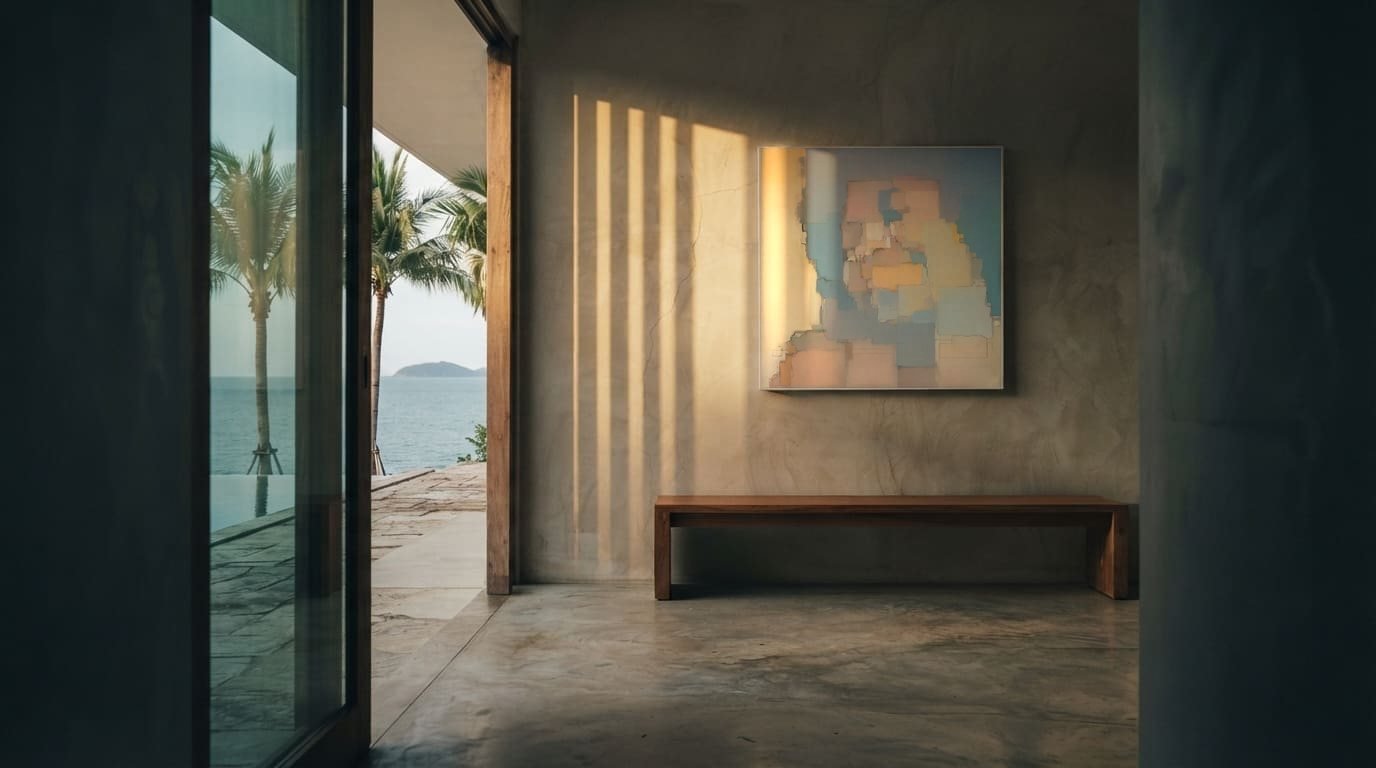
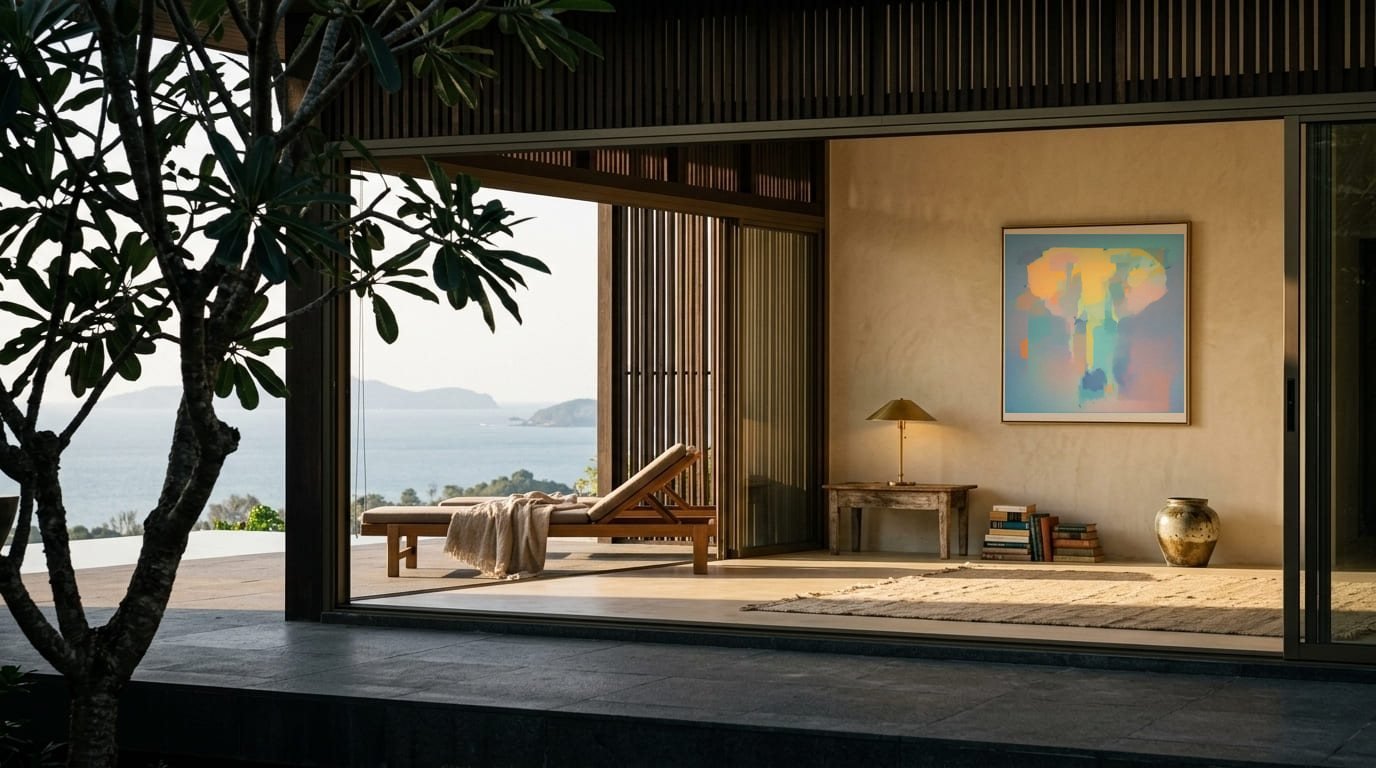 Illustration · Perceptual Artwork: Veil Drift, 90 × 90 cm
On an island of beautiful villas, the one that is remembered is the one that was felt.
Sean de Ganzi · Founder & Perceptual Director
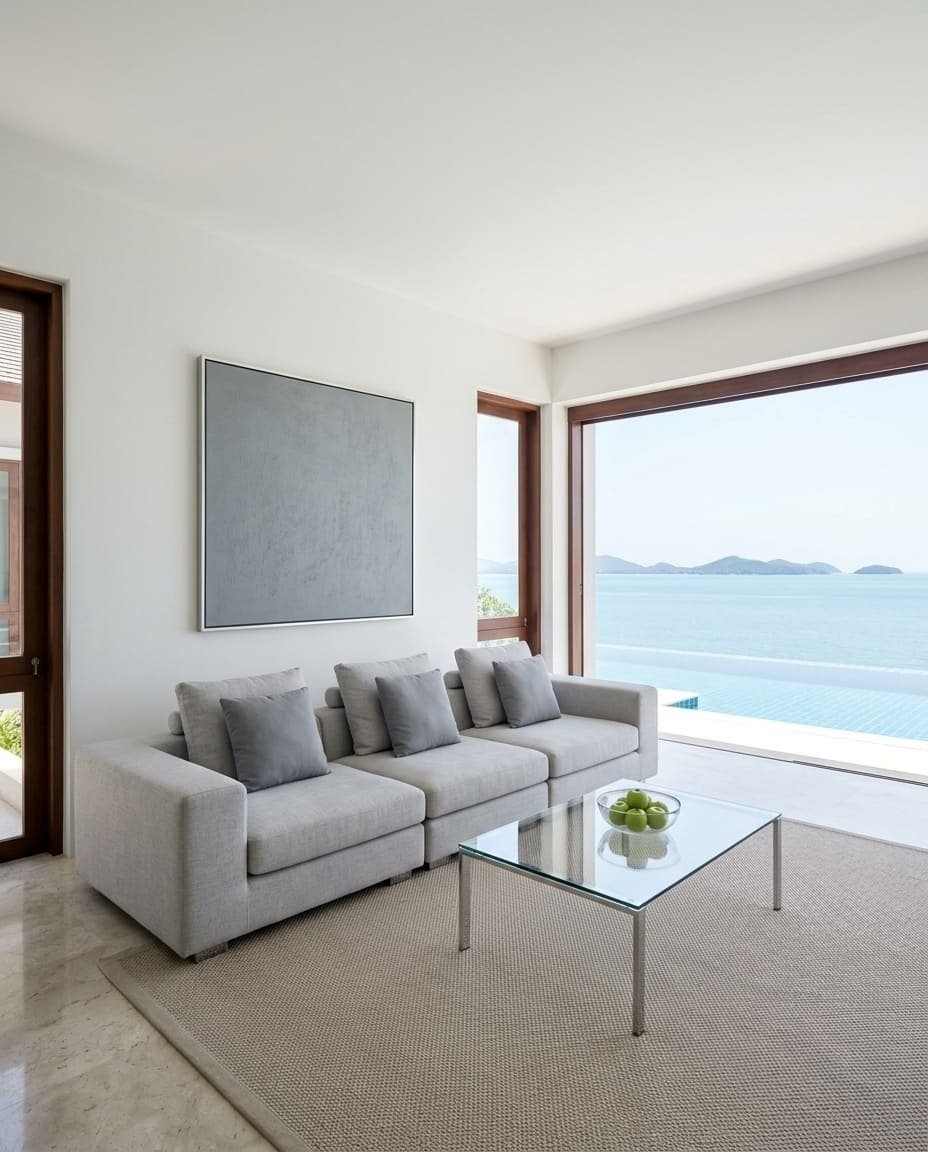
Scroll through the villas offered for rent on Koh Samui, or spend a day visiting those for sale, and a strange impression sets in. The infinity pool facing the sea. The white walls and the teak. The large grey sofa, the monochrome canvas above it, the bowl of green apples on the kitchen island. After the fifth villa, they begin to blur into one.
Swap the photographs between two listings, and few people would notice.
How the Samui villa became a template
None of this comes from a lack of quality. Many villas on the island are well designed and well built, with noble materials and a remarkable setting. The problem lies elsewhere.
Over the years, the same references have circulated: the same images of tropical modernism, the same suppliers, the same furniture packages, the same way of styling a house for its listing photographs. Each choice is reasonable. Together, they produce villas that are correct, attractive, and interchangeable.
A villa designed to photograph well is not the same as a villa designed to be felt. The first looks good on a screen. The second is the one people remember.
Why looking alike costs more than it seems
When you rent. A guest choosing a villa on Koh Samui compares dozens of listings that look almost identical. When nothing distinguishes them, the comparison falls back on the only clear difference left: the price. The villa that is remembered is the one guests describe in their own words, recommend to friends and come back to.
When you sell. A buyer may visit several villas in a single day. By the evening, the white walls and the pools have merged. The one that stays in mind is the one where something was felt: a room where the light was right, a view that seemed composed for them, a house that felt lived in rather than staged. A buyer does not only buy square metres and a pool. He buys a life he can imagine.
In both cases, the difference that counts is not visible in the floor plan. It is perceptual.
The difference is not in the architecture
The view, the volumes and the structure of a villa cannot easily be changed, and they rarely need to be. What guests and buyers remember lies in less obvious places: the first room they step into, the way the light moves through the day, the sequence from the door to the terrace, a few objects that seem to have a history, and the artworks that give the house its character, or fail to.
This is where a villa can stop looking like the others, without moving a single wall.
Step one: a perceptive audit
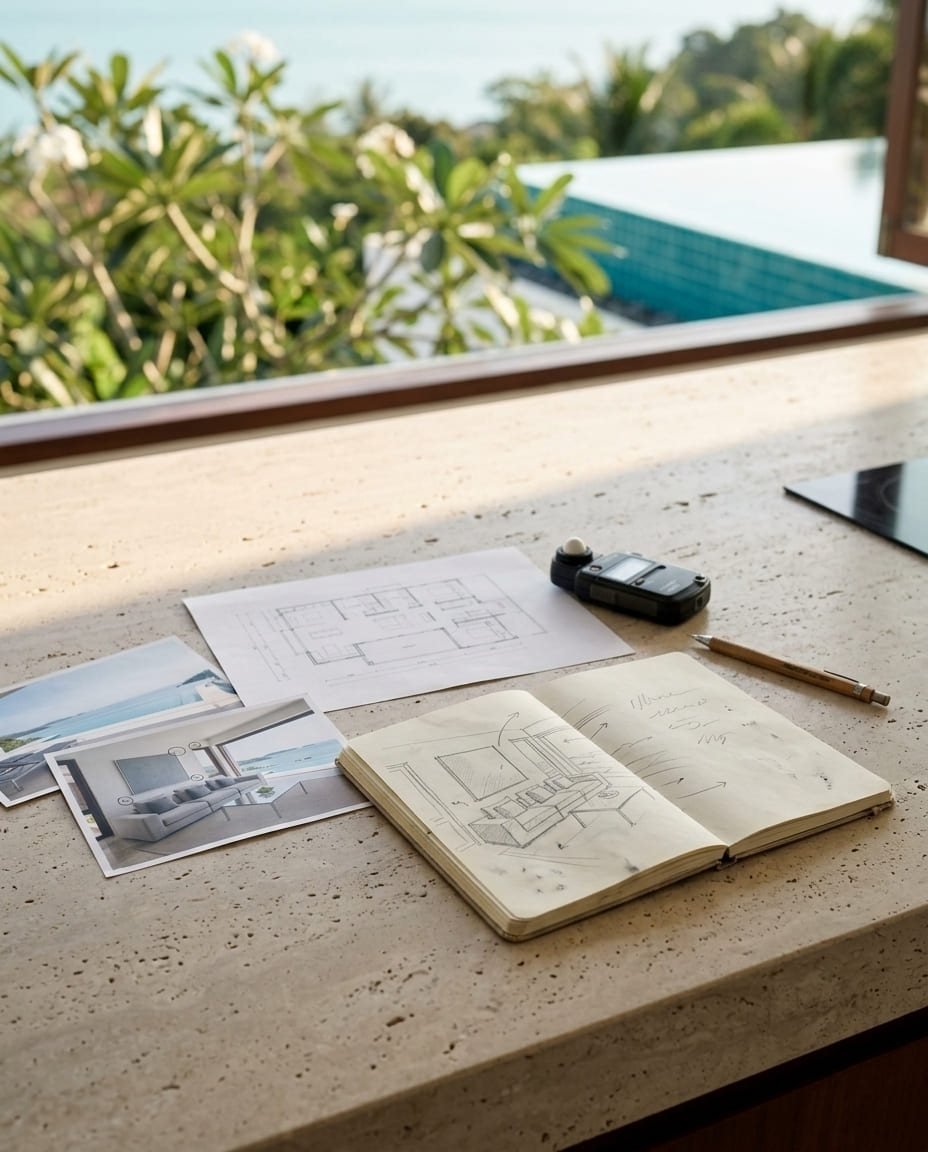
A perceptive audit reads the villa the way a guest or a buyer actually lives it:
- The arrival, and the first room one steps into.
- The living spaces at different hours of the day.
- The view on waking up.
- The passages between rooms.
- The evening, when the house turns inward.
- And the photographs, where most first impressions are now formed.
 Illustration
What you receive is a written reading of what your villa conveys today, compared with what it should convey; the places where it speaks the language of every other listing; and the few interventions that will change the most, in order of priority. The audit is offered at several levels of depth, from a short reading to a complete perceptual signature, and is usually delivered within fifteen days.
The audit is not aesthetic. It does not ask whether the villa is beautiful. It asks whether what the villa makes felt matches what it promises. About our approach →
Step two: a perceptual renovation
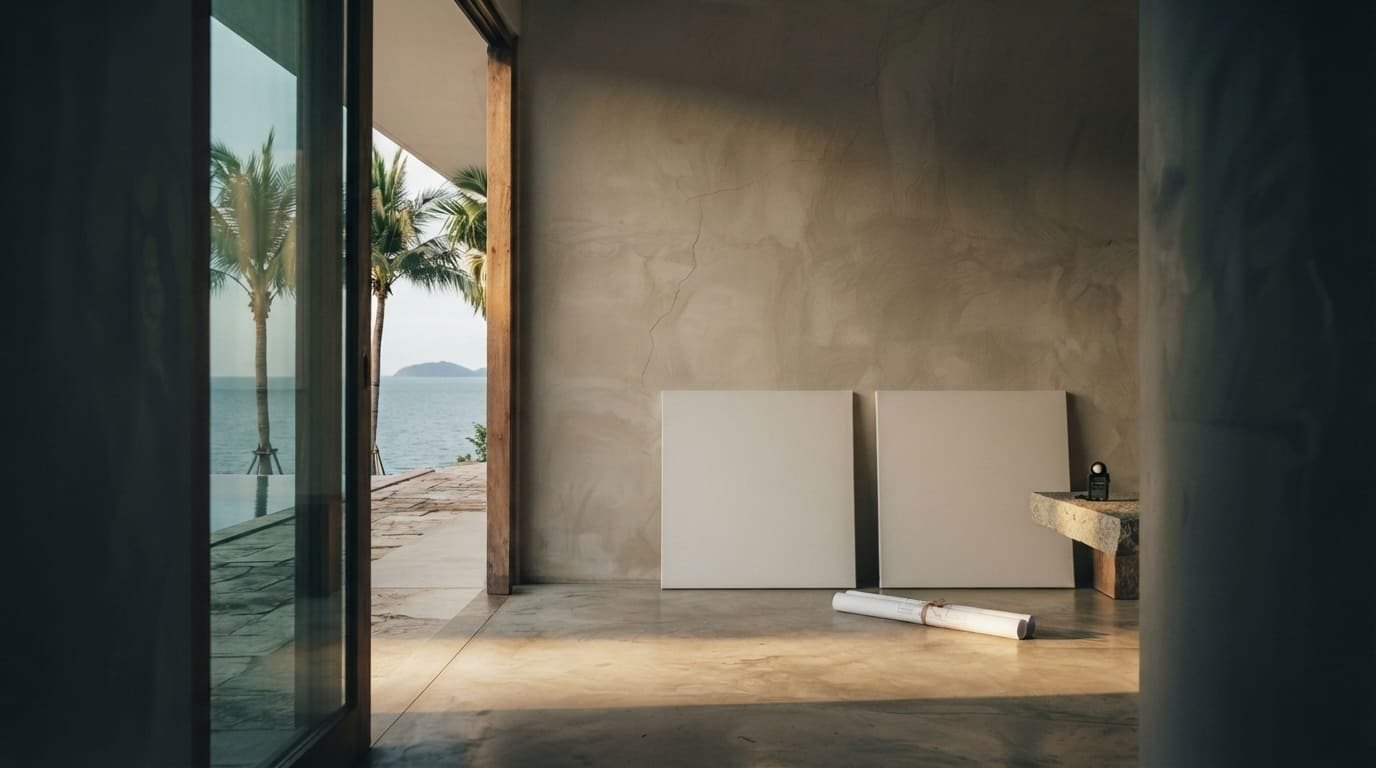
A perceptual renovation changes how a villa is felt, not how it is built.
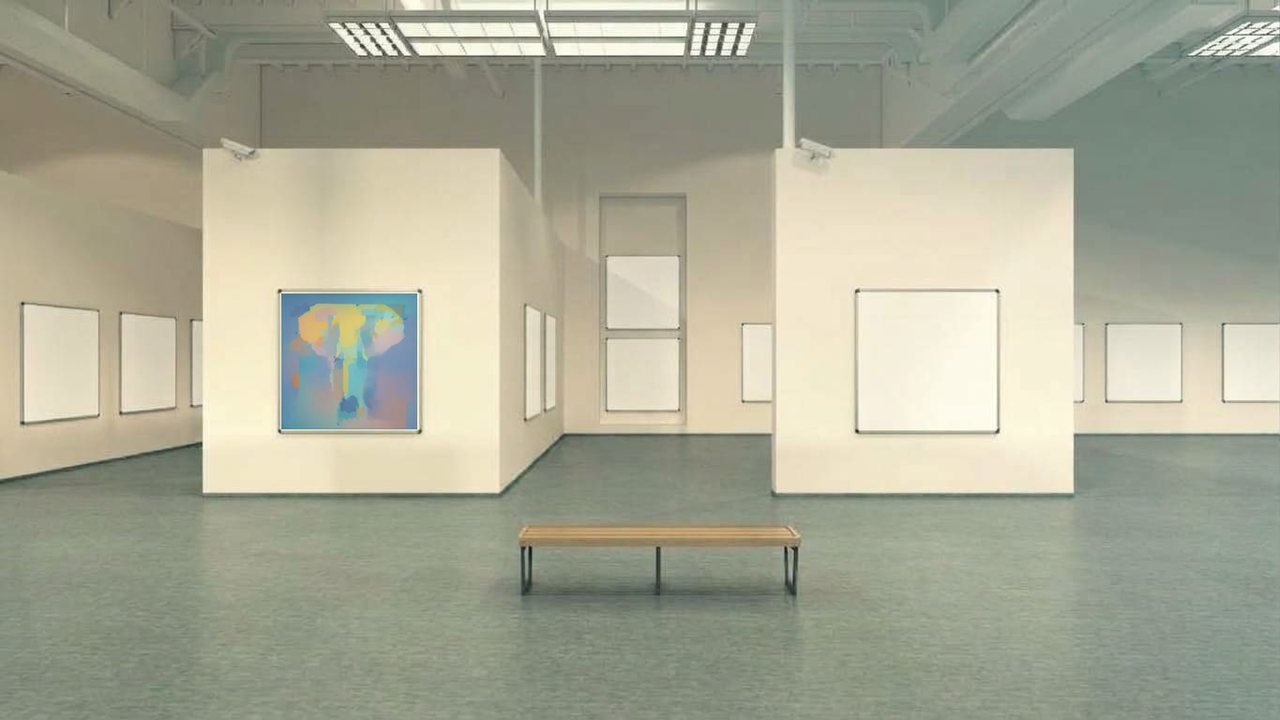
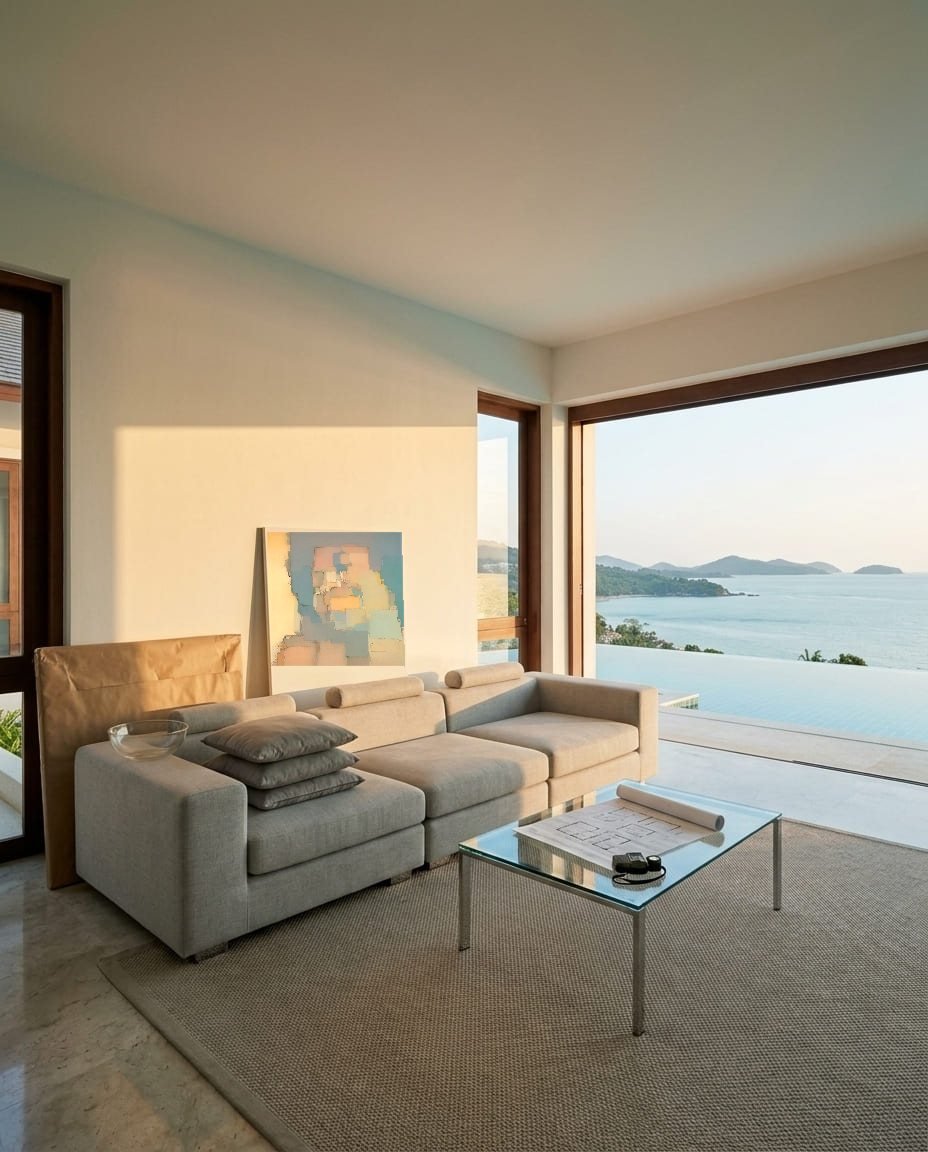 Illustration · Artwork: Tidal Cognition, 90 × 90 cm
It usually begins by removing: the generic pieces, the decorative accents and the borrowed palettes that make the villa look like a showroom. It then gives the house what it lacked: artworks chosen or commissioned for this villa, calibrated to its light and its view; a clear sequence from the entrance to the terrace; a few pieces that feel kept rather than bought. Sometimes, a lamp moved or a curtain changed does more than a new sofa.
The artworks are at the heart of it, and the villa decides which ones. We never choose an artwork because we have it: we choose it because the house needs it. It can come from the collections shown by Art Samui, or be created for the villa by Sean de Ganzi or by one of our partner artists, under our direction. For a larger project, the whole house can be composed as a story, from the first room to the last. Spatial storytelling →
A perceptual renovation is far lighter than a structural one. No walls are moved, no permits are needed, and the villa can usually remain in use.
For owners who rent
 Illustration
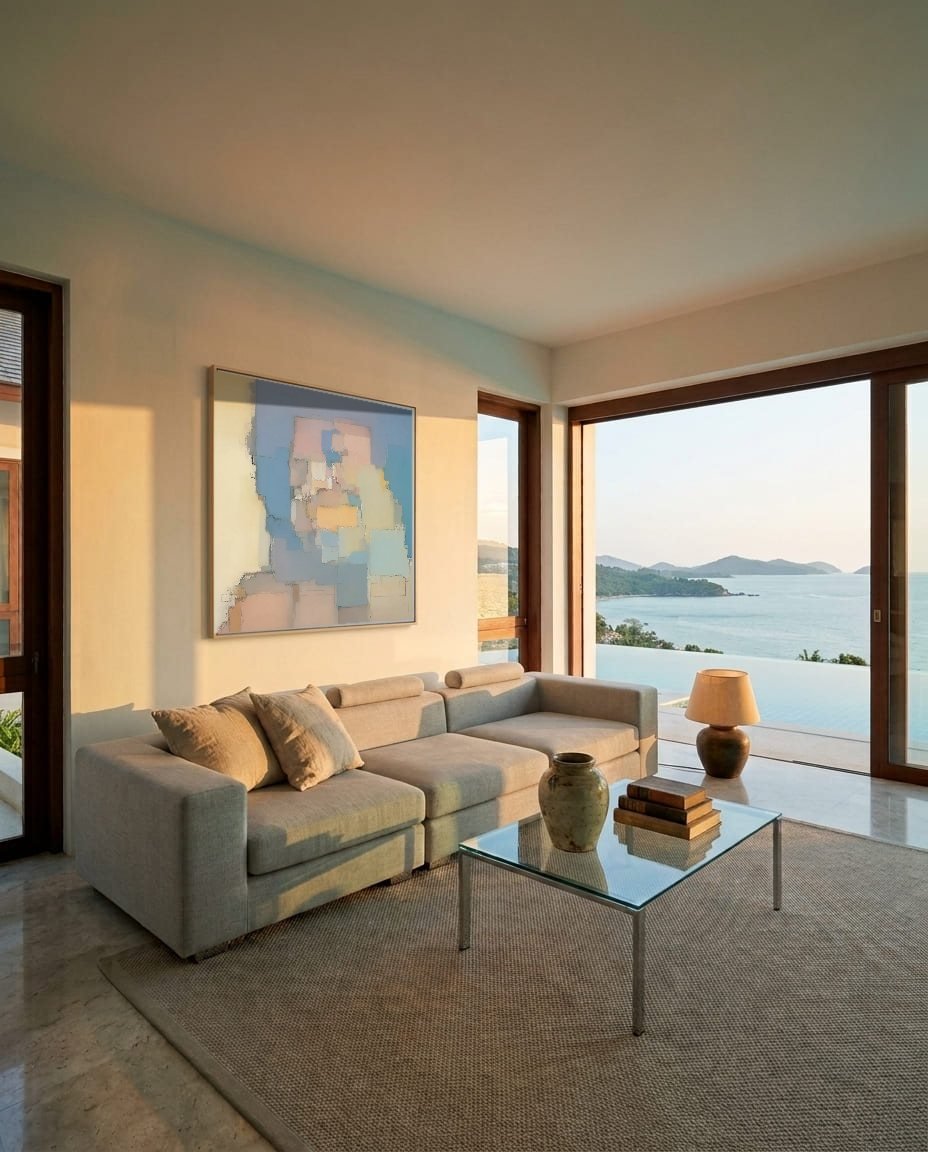 Illustration · Artwork: Tidal Cognition, 90 × 90 cm
A villa that has been calibrated photographs differently, because there is something to photograph beyond the pool. The first image of the listing no longer resembles the others. The description can speak of a feeling rather than a list of features. And the reviews begin to describe the house in the guests' own words, the strongest argument a listing can have.
For owners who sell
A villa that feels lived in lets a buyer project himself into it. Instead of a staging kit that every visitor has already seen elsewhere, the house tells one story, coherent from the door to the view. Depending on the agreement, the artworks can be included in the sale or kept by the owner.
What a perceptual renovation is not
It is not a redecoration with new furniture. It is not a home-staging package. It is not a Thai-themed décor of carved figures and lotus motifs. And it is not a question of budget. It is a question of precision: knowing what the villa should make felt, and correcting what prevents it.
Is your villa felt, or only seen?
If your villa is one of the many beautiful houses of Koh Samui, the question is not whether it is good enough. It is whether anyone will remember it. Art for villas and residences →
Questions about villas in Koh Samui
What is a perceptive audit?
It is a reading of a place as the people who use it actually live it. For a villa, it identifies what the house conveys today, where it resembles every other listing, and which interventions will change the most.
How is a perceptual renovation different from interior design or home staging?
Interior design organises the spaces and home staging prepares them for photographs. A perceptual renovation works on how the villa is felt: its light, its sequence, its artworks and what it removes. It often begins by taking things away rather than adding them.
Do I need to renovate my villa before selling it in Koh Samui?
Rarely in the structural sense. What most often makes a difference to buyers is perceptual: a house that feels lived in and coherent, rather than one more white villa with a pool.
Can the artworks be included in the sale of the villa?
Yes, if the owner wishes; they can also be kept and moved to another home.
Do you only propose artworks from your own collections?
No. We start from the villa, not from our stock. If an artwork from our collections fits, we propose it; if none does, we have one created for the house.
Do you work with villa management companies and real estate agents?
Yes. We work with owners directly, and with the agents and managers who represent them.
On an island of beautiful villas, the one that is remembered is the one that was felt.
Read also: Art in Koh Samui: learning to see the island