

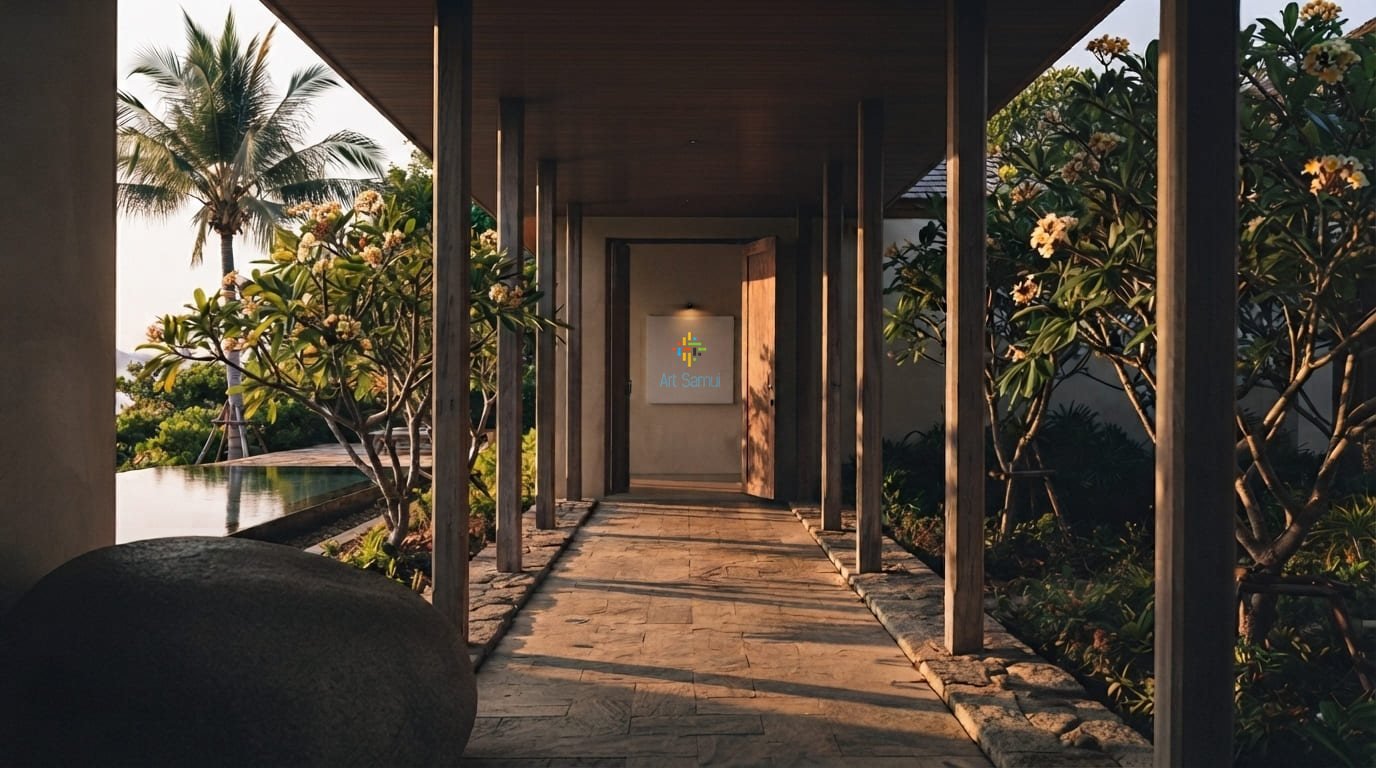
On Perceptual Direction
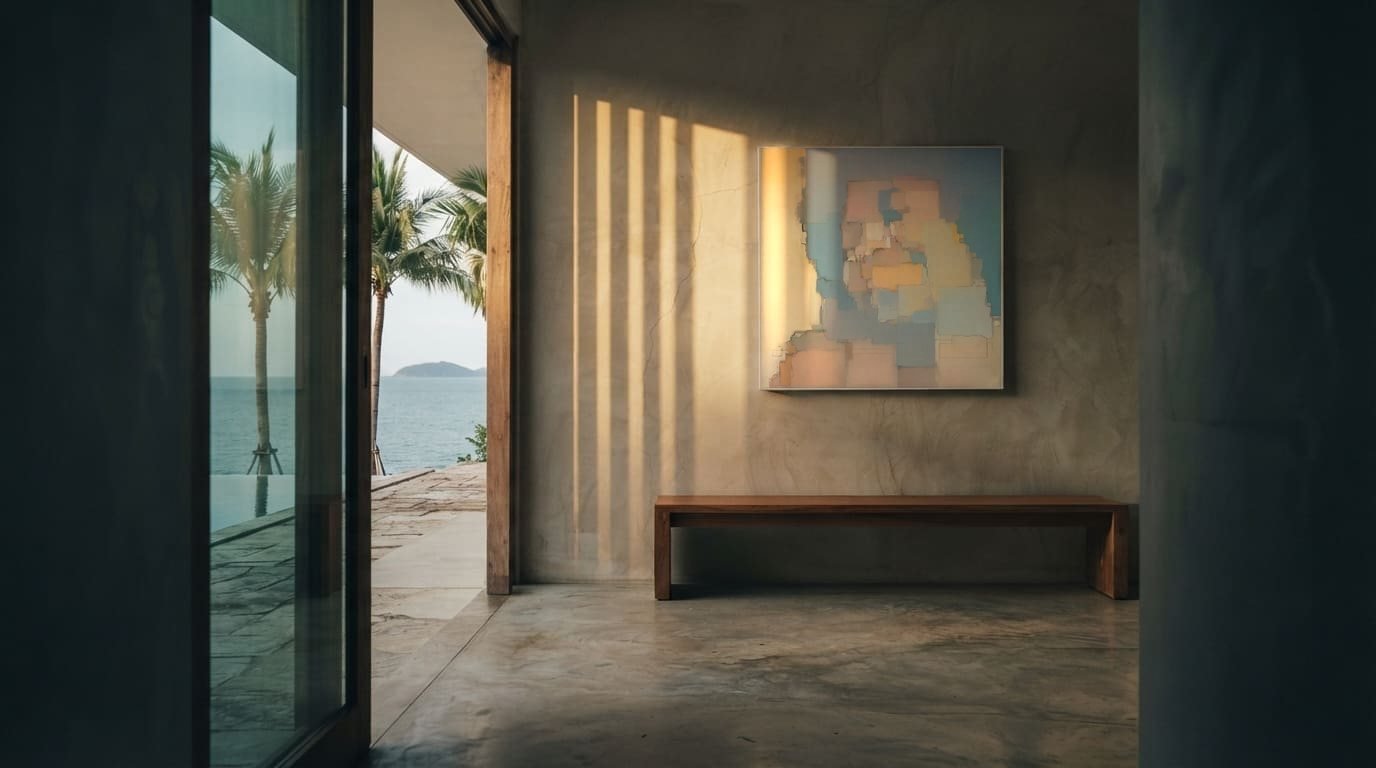
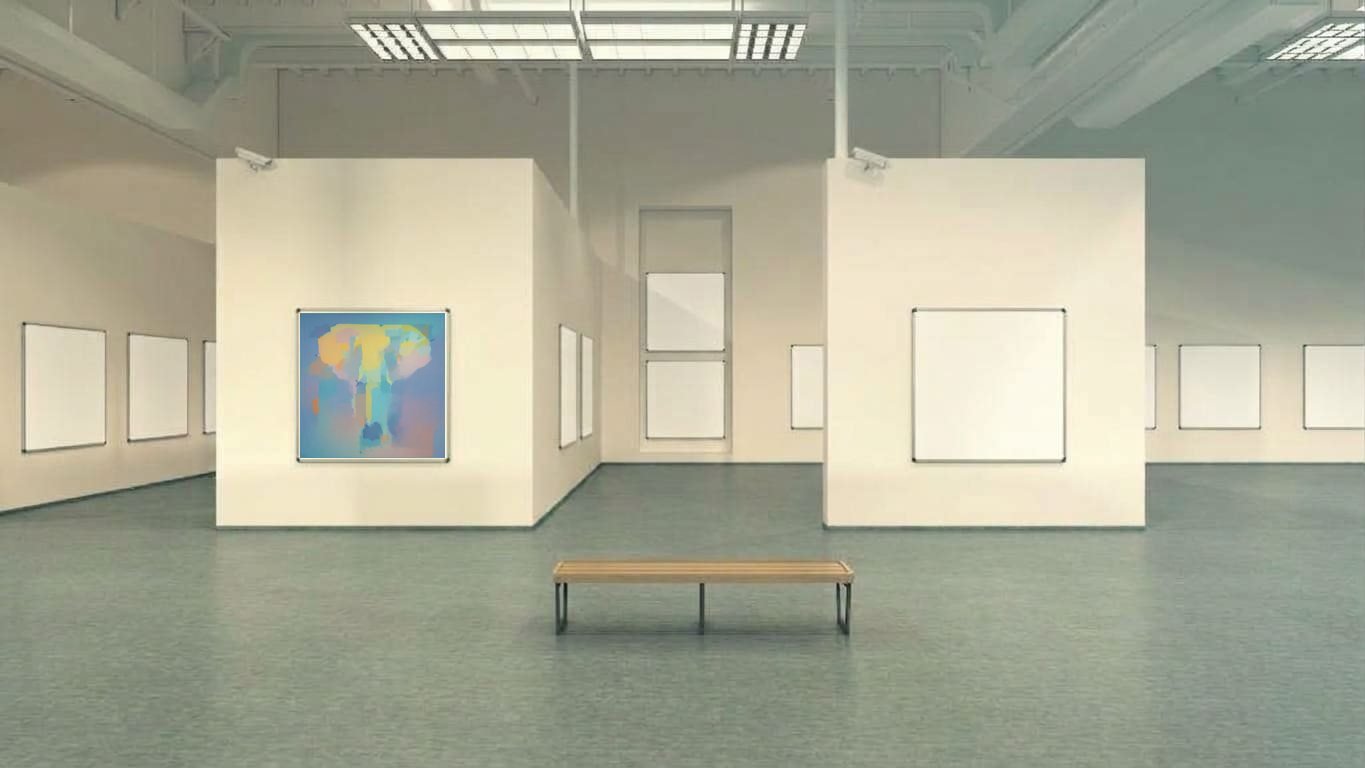 Illustration · Perceptual Artwork: Veil Drift, 90 × 90 cm
Why so many beautiful places leave no trace, and what we do about it.
Sean de Ganzi · Founder & Perceptual Director
Spend a season visiting the finest hotels, spas and villas of Southeast Asia, and a strange impression sets in. The places are beautiful. The materials are noble, the light is studied, the execution is flawless. And yet, after a few of them, they begin to merge into one composite memory: a stone and timber lobby, linen sofas, a large textured canvas in a neutral palette, a view framed exactly as expected.
Nothing is wrong. Something is missing.
I have spent years trying to name what is missing. This essay is about that name, and about the work it describes.
The places that stay with us
There are places that leave a trace, and places that do not.
It is not a question of beauty. The places we forget are often, by every material standard, more beautiful than the ones we remember. They are better built and better photographed. But guests leave them as they entered them: pleased, slightly impressed, and unchanged.
And then there are the others. A small guesthouse whose morning light you still remember. A spa where the silence seemed to continue after you had left. A corridor you cannot explain, but cannot forget either. These places are rarely perfect. Something in them was simply placed with intention, and that intention reached you.
Intention, emission, perception
What separates the two is not decoration. It is whether the intention of the people who conceived a place actually reaches the people who live in it.
Three words help me describe it.
Intention is what the place is meant to convey: calm, prestige, intimacy, a sense of belonging. It is usually clear, and often beautifully written in a brief.
Emission is what the place actually conveys, through its materials, its volumes, its light, its objects, its rhythm and its silences.
Perception is what guests receive, and what stays with them once they have gone.
In most projects, even excellent ones, these three are handled one after the other, by different hands: the owner, the architect, the interior designer, the art consultant. Each does their part well. But between the intention written at the start and the perception lived at the end, a small gap forms. It is rarely visible. It is always felt.
Closing that gap is the discipline I call Perceptual Direction: reading what a place should make felt, and directing everything that serves it, artworks first.
What it looks like in practice
Imagine a spa whose brief asks for one thing: that guests leave quiet. Not entertained, not impressed. Quiet.
The spa is delivered with care. Pale stone, indirect light, soft music, a water feature near the entrance. And above the reception desk, a large canvas in warm orange and ochre, chosen to express energy.
The intention was quiet. The artwork says energy. Add a bright accent here, a busy texture there, the sound of water that keeps part of the attention awake, and the place begins to say something slightly different from what it promised. Guests leave rested, but not quite as quiet as they could have been. They cannot say why.
Directed differently, the same spa would have started from that single word. The canvas above the desk would have been chosen to ask nothing of the eye: a contained palette, a slow surface. A light might have been lowered. The water feature might have been moved, or removed. Nothing spectacular, and nothing that guests would notice. They would simply feel what the place was built to make them feel.
Or take a villa on Koh Samui, offered to rent. The owner wants guests to feel they have stepped into a home that has been lived in. The villa is delivered beautifully styled: white walls, new furniture, three large prints of tropical leaves. Everything says new. Nothing says lived in.
Directed, the same villa would not be styled. It would be inhabited, in a sense, before anyone arrives. Its artworks would carry the trace of the time spent making them. One piece in the bedroom would feel kept rather than bought. Some things would be taken away. Why Koh Samui villas look alike →
In both cases, no single object changes the experience. What changes it is that every choice now answers the same intention.
How a project unfolds
Our method is internal, and it stays that way: it is delivered through each place, not explained. But the way a project unfolds is simple to describe.
A conversation. It begins with thirty minutes, at the gallery or by video. You tell us about the place, and about what it should make felt.
A reading. We then read the place the way guests live it: the arrival, the first room, the passages, the view on waking, the evening, the last image before leaving. You receive a written Perceptive Audit: what the place conveys today, where it departs from its intention, and the few interventions that will change the most.
A brief. From that reading comes a single brief, shared with your architects and designers, that every decision about the artworks can refer to.
The artworks. Then come the artworks, and only then. They are chosen from our collections or created for the place, by me or by the artists we work with. We never choose an artwork because we have it. We choose it, or have it created, because the place needs it.
The sequence. Artworks in a place are never a collection of separate pieces. Their order, their distance and the moment at which each one appears form a sequence that guests follow without noticing.
Our readings follow an internal method developed with the Perspicism research lab in Switzerland, and informed by research in environmental psychology and the science of perception. Our approach →
On naming what has never been named
Why has this gap remained unaddressed for so long, in professions that pride themselves on rigour?
I believe the answer is simple. The people who sensed it most clearly, the architect who felt a project was not quite landing, the operator who watched guests cross a lobby without ever settling in it, the designer who knew something was missing, did not have the words for it.
What cannot be named cannot be shared. And what cannot be shared is never corrected.
My work as a Perceptual Director begins there: in giving words to what professionals have observed for years, so that it can finally be worked on together. The artworks are where those words become visible.
An invitation
If you shape places meant to stay in someone's memory, as an owner, an operator, an architect or a designer, you have probably met this gap already. It is not new. What is new is the decision to treat it as a discipline rather than a matter of taste.
I write from Koh Samui, where we practise Perceptual Direction for hotels, spas, villas and developments. If this resonates, I would be glad to continue the conversation.
The atmosphere is never invisible. Only unnamed.
Sean de GanziFounder & Perceptual Director, Art Samui